Common mistakes when assembling rack and pinion systems
 A low-backlash rack-and-pinion drive offers excellent positioning accuracy, a long service life, and high dynamic performance – provided it is properly mounted and adjusted. In practice, however, problems often arise due to incorrect installation. In this article, we list the most important mistakes and provide practical tips to prevent them.
Missing or incorrect alignment and positioning
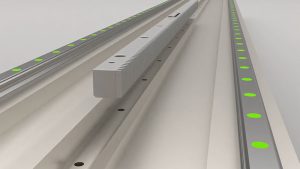 One of the most common errors is that racks are not precisely aligned and positioned according to tolerances and specifications. A rack must lie straight and parallel to the direction of movement, with minimal deviations in perpendicularity and flatness. Incorrect alignment causes:
- increased wear of teeth and bearings
- lower transmission efficiency
- premature failure due to uneven load.
Tip: Use precision tools during assembly and follow the assembly instructions carefully. Apex Dynamics offers detailed English-language instructions for this.
Insufficient attention to concentric mounting of the pinion
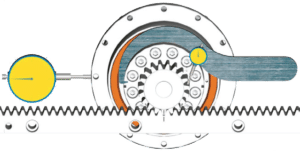
When mounting the pinion onto the gearbox, insufficient account is sometimes taken of the concentricity of the pinion relative to the shaft and the rack. This can lead to uneven gear engagement and faster wear. Apex Dynamics can pre-mounted pinions with markings at the highest point to ensure a correct position during installation.
Error: Mounting pinions directly without markings or tools.
Solution: Request a pre-assembled pinion with markings, or use mounting racks and precision pins to secure the correct position.
Incorrect adjustment of the pinion on the rack
 Even with proper alignment, incorrect clearance between the pinion and rack can lead to problems. Excessive clearance means inaccurate positioning; a fit that is too tight increases friction and wear. This is one of the reasons why Apex Dynamics demonstrates in their videos how to correctly adjust the pinion for minimal clearance and maximum lifespan.
Tip: Follow the adjustment steps carefully and check the play along the entire length of the rack.
No use of assembly aids
Many technicians skip using available tools such as:
- mounting racks to equalize the pitch
- precision pins to check perpendicularity and height
- marked pinion positions.
Apex Dynamics even provides these tools as a service, which speeds up installation and minimizes errors.
No checking of tolerances and specifications
Rack and pinion have specific tolerances for gearing, straightness, perpendicularity, and parallelism deviations that directly contribute to the accuracy of the system. Ignoring these tolerances during assembly leads to performance loss. Apex Dynamics makes these tolerances transparent in their catalog so that engineers can justify the right choices.
Conclusion
Correct installation of rack and pinion systems requires attention to alignment, positioning, adjustment, and tolerances. By using the available mounting tools and detailed instructions, you can avoid common errors and optimize the lifespan, accuracy, and reliability of the drive.
Would you like an installation checklist or a step-by-step guide? Contact Apex Dynamics for technical support.