Gearbox as a critical link for precision and uptime in the food industry
In the food and packaging industry, the margin for error is minimal. Whether a machine contains a hundred gearboxes or just one: every component must contribute to flawless uptime and extreme precision. Based on concrete practical examples, from complex bacon production lines to high-precision filling installations, we explore the technical requirements and desires that engineers face today. Because behind every successful machine lies a well-thought-out choice for the right drive technology.
Torque: higher than you think
Food processing requires power, often more than outsiders might assume. Cutting cheese, for example, demands high torques at relatively low speeds. Cheese has a texture that offers resistance, and the cutting blades must overcome that resistance consistently.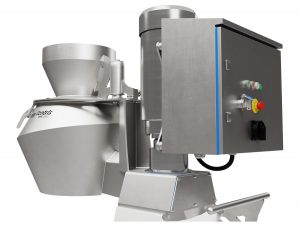
Processing meat, positioning jerrycans, or keeping packaging film under tension: these are all applications where the output torque of the gearbox is a critical design parameter. FAM, a manufacturer of industrial cutting machines, needed a planetary gearbox with a torque of up to 2,000 Nm for their Centris 400C Optitec (a machine specifically developed for slicing cheese). Combined with the requirement for a full stainless steel execution and aseptic quality, this was a combination that is not widely available.
The AE205 from Apex Dynamics fit the profile: a gear ratio of 6, the required torque capacity, and full stainless steel. Including a custom-made motor adapter, this was delivered within five weeks. For Amtra, a builder of filling installations for aggressive liquids, the task was different: a right-angle setup in a limited installation space, a torque of up to 270 Nm, and a ratio of 10:1 to reduce speed and optimize the mass inertia ratio. The AERS series offered the solution here: right-angle, full stainless steel, and standard equipped with a food-grade lubricant.
Although these are two completely different machines, the starting point remains the same: the torque partly determines the machine architecture, and the gearbox must be aligned with that from the very beginning.
Low backlash: because repeat accuracy counts
In packaging machines, cutting machines, and positioning systems, the gearbox is not just a power transmitter; it is also a precision instrument. Backlash in the drive translates directly into variation in the end product. A packaging machine that feeds the film a millimeter too far or too short produces packages that are incorrect. A cutting machine with backlash in the drive does not cut consistently, and at high production speeds, those deviations add up quickly.
Low-backlash planetary gearboxes are not a luxury in these applications, but a functional requirement. The planetary architecture, in which multiple planet gears distribute the load evenly, ensures high stiffness, low backlash, and a compact design with high power density.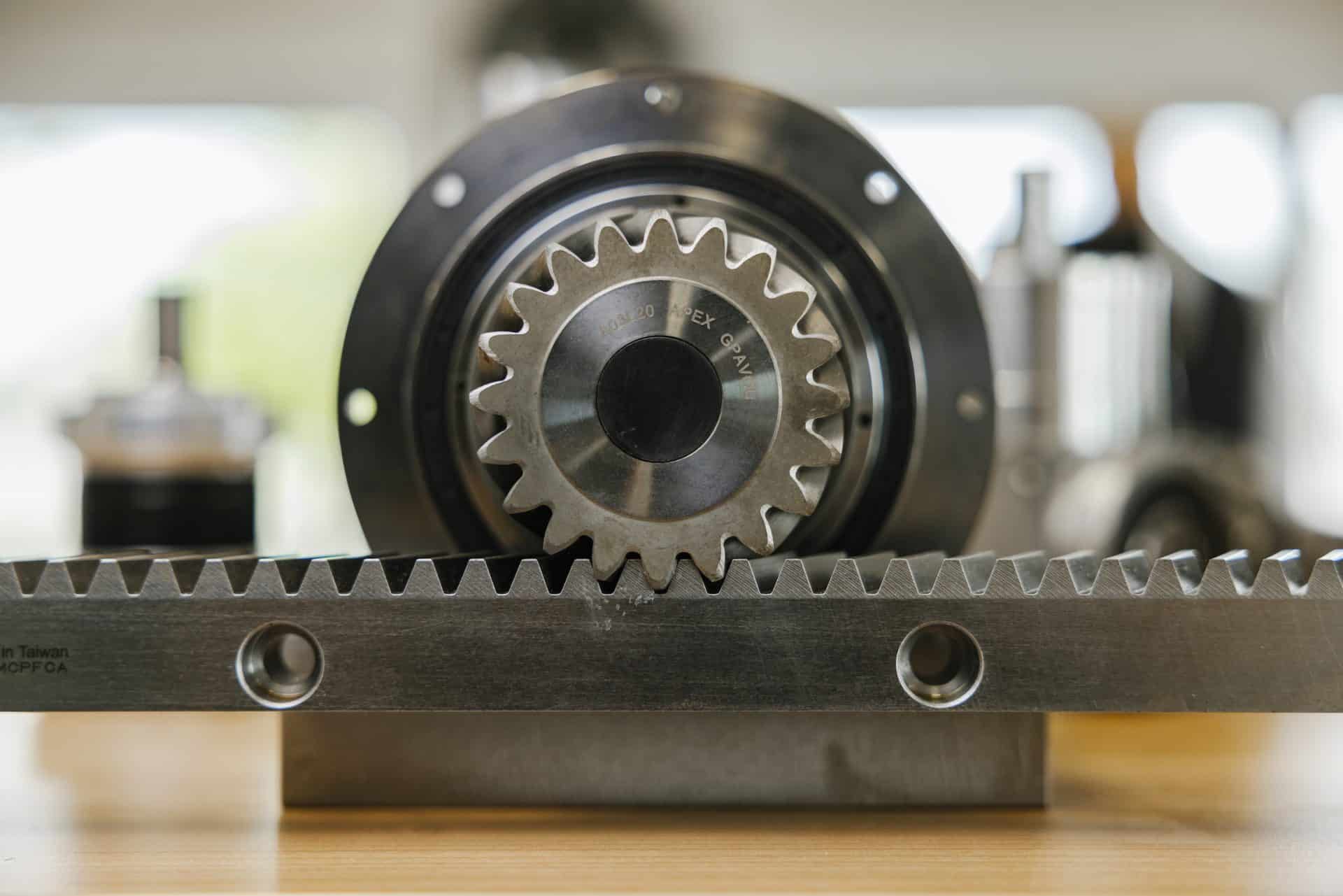
Eric Megens — Sales Manager Apex Dynamics: “The conversation about backlash is often only held once there is already a problem. By then, a machine is in use and the products aren’t quite right, or the accuracy is less than expected. At that point, people start looking back at the drive and discover that the tolerances are wider than they thought.
What I always advise engineers: look at the total motion chain. The servo motor delivers accuracy, but the gearbox determines how much of that remains at the output side. If you have a motor with excellent repeat accuracy and you couple it to a gearbox with wide backlash, you are throwing away part of that investment.
In food and packaging machines, I see that this difference is truly noticeable. Not just in product quality, but also in how the machine behaves over time. A low-backlash gearbox wears differently, behaves more predictably, and causes fewer problems when you recalibrate the machine after a few years or change over a line for a different product. That is an advantage you won’t see on the datasheet, but you will see it in practice.”
Availability: delivery time is also a spec
A gearbox that meets all technical requirements exactly but has a fourteen-week lead time is not a solution. Certainly not in a market where machine builders are under pressure to deliver quickly, and where downtime costs revenue immediately. Availability is a selection criterion that engineers sometimes underestimate until something goes wrong.
Apex Dynamics works with stock and standard delivery times of three weeks for most versions. No exotic items, no special production orders for a standard size. For custom work, such as the stainless steel motor adapter for FAM, delivery is within five weeks. This is a conscious choice: standardize what can be standardized so that the engineer who has to deliver a machine is not dependent on production schedules on the other side of the world.
ATEX: don’t forget it in food
In certain segments of the food industry, ATEX certification is a strict requirement. Wherever dust can ignite—such as in sugar processing, flour processing, or certain grain lines—the entire installation must be certified. Naturally, this also applies to the gearbox.
Tanis Confectionery, a world leader in solutions for the confectionery industry, needed gearboxes that were full stainless steel, food-grade lubricated, and ATEX certified. With the AT-FH series and the AE series, Apex Dynamics was able to provide that combination. These series utilize helical or spiral gearing for low vibration and noise levels. It is essential to identify ATEX early in the specification phase to avoid surprises later.
Torque, backlash, availability, material, certification: five criteria that together determine whether a gearbox in a food or packaging machine truly works. Not in theory, but in the practice of a machine that produces day in and day out, is cleaned, and must restart again. The gearbox is then not a commodity; it is a design choice with consequences for the performance, lifespan, and operational reliability of the entire machine.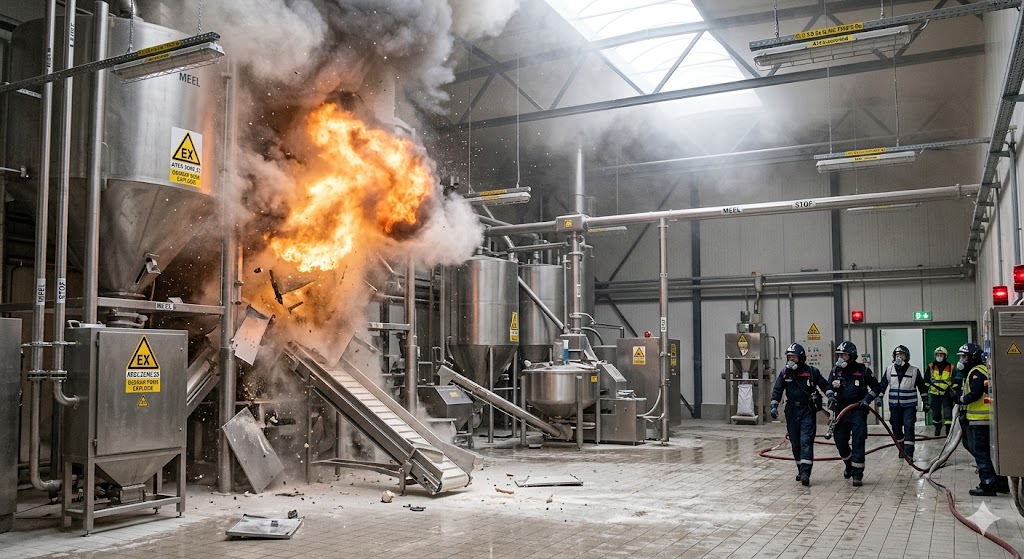
Selection without the hassle
How do you translate all these criteria into a concrete choice? The Design Tool from Apex Dynamics allows engineers to directly calculate the combination of servo motor and gearbox, including torque capacity, mass inertia ratio, and available versions. Drawings can be downloaded immediately. The Quickfinder searches more than 55,000 configurations. This is not just convenient; it significantly shortens the time between design concept and concrete selection. And time, in the construction of food and packaging machines, is just as scarce a commodity as installation space.
Do you have questions or would you like personal advice from one of our specialists? Then contact sales@apexdyna.nl or call +31 (0)492 509 995 and you will always receive an answer within 24 hours on working days.